Quick answer
A chlorine reading does not explain every green pool. Check free chlorine, pH, stabilizer, filtration, and possible staining or metals before choosing a treatment.
The short answer
Your pool may be green because the available sanitizer is not adequate for its conditions, algae is present, filtration is struggling, or dissolved metals are affecting the color. A single chlorine reading cannot distinguish those causes. Do not assume every green pool needs the same product or dose. This applies to both traditionally chlorinated and saltwater pools in Winter Garden, Windermere, Clermont, Apopka, and Orlando. The useful question is not just whether chlorine exists, but what the full water test and inspection show.
Are you measuring free chlorine or total chlorine?
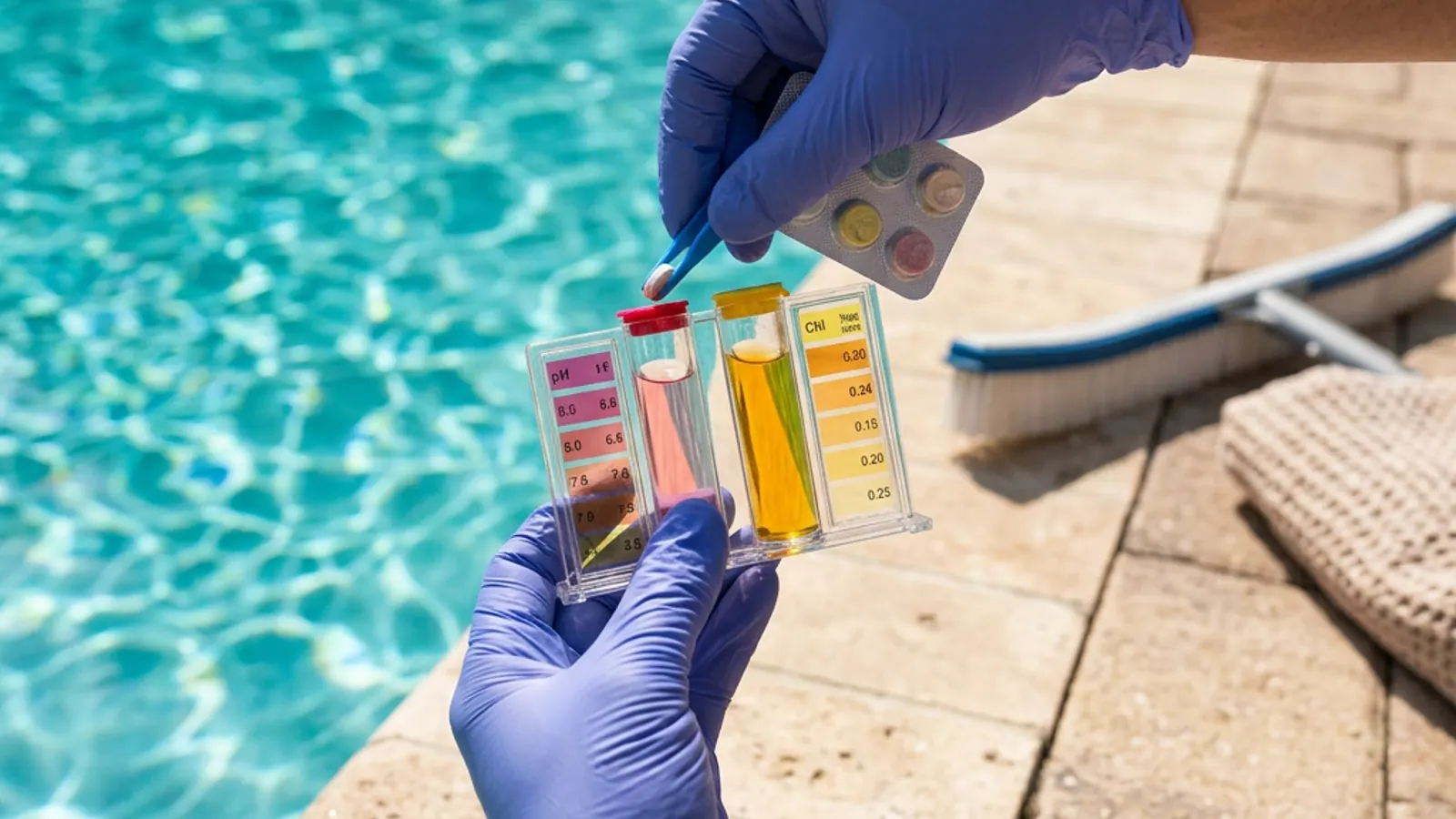
Free chlorine and total chlorine are different measurements. Read the test-kit directions and identify exactly what the result represents. pH also matters because it affects chlorine's ability to kill germs. Record the numbers rather than reporting only that the test looks normal. CDC recommends pH of 7.0–7.8, with at least 1 ppm chlorine in pools or at least 2 ppm when cyanuric acid or stabilized chlorine products are used. Those minimums are not a universal algae-treatment recipe. A professional should consider stabilizer and the full water balance when recommending treatment.
Could stabilizer or testing error be part of the problem?
Cyanuric acid changes how chlorine behaves, so a chlorine result should be considered alongside the stabilizer reading. Do not add more stabilized products automatically without understanding the existing level. If the test seems inconsistent with the pool's appearance, check your technique and the condition of the test supplies. CDC notes that chlorine above 10 ppm can partially or fully bleach a test, producing a misleading low or zero result. That is another reason not to keep adding chlorine in response to an unexplained result.
Could green water be something other than algae?
Some dissolved metals can affect water color, and stains or fine debris can complicate the picture. A change after adding water or chemicals is useful information, but it is not proof of a particular cause. Share the timing, recent products, and water-source changes with your technician. Algae-related problems also require physical cleaning and attention to circulation and filtration. Adding a product without removing debris or addressing poor flow may leave the original problem unresolved. Never open a filter while it is pressurized.
What should you do next?
Keep swimmers out if visibility is poor or water chemistry is unsuitable. Collect a complete, reliable water test; describe whether the color is uniform or attached to surfaces; and note any equipment alerts. Follow chemical labels, never mix products, and do not use a guessed dose from a different pool. Ask Splash Theory Pools for an assessment of cleaning and water-balancing needs in your service area. Recovery time depends on the cause and condition of the pool, so a responsible plan starts with diagnosis rather than a guaranteed overnight result.
Frequently asked questions
Can a saltwater pool turn green?
Yes. A saltwater pool still depends on chlorine, water balance, circulation, and cleaning. A running generator does not guarantee an adequate free-chlorine level.
Should I add more chlorine if the test reads zero?
First confirm the test is reliable and follow product guidance. Very high chlorine can bleach some tests and produce a misleading low result.
Is every green pool caused by algae?
No. Metals and other factors can affect water color. A complete test and inspection help distinguish causes.
How quickly can a green pool be cleared?
There is no reliable universal timeline. The cause, severity, filtration, equipment, and treatment response affect recovery.