Quick answer
Between professional visits, Orlando pool owners should test the water, watch for debris and circulation changes, and respond to storms or heavy use rather than waiting for the next appointment.
What is the homeowner's job between weekly visits?
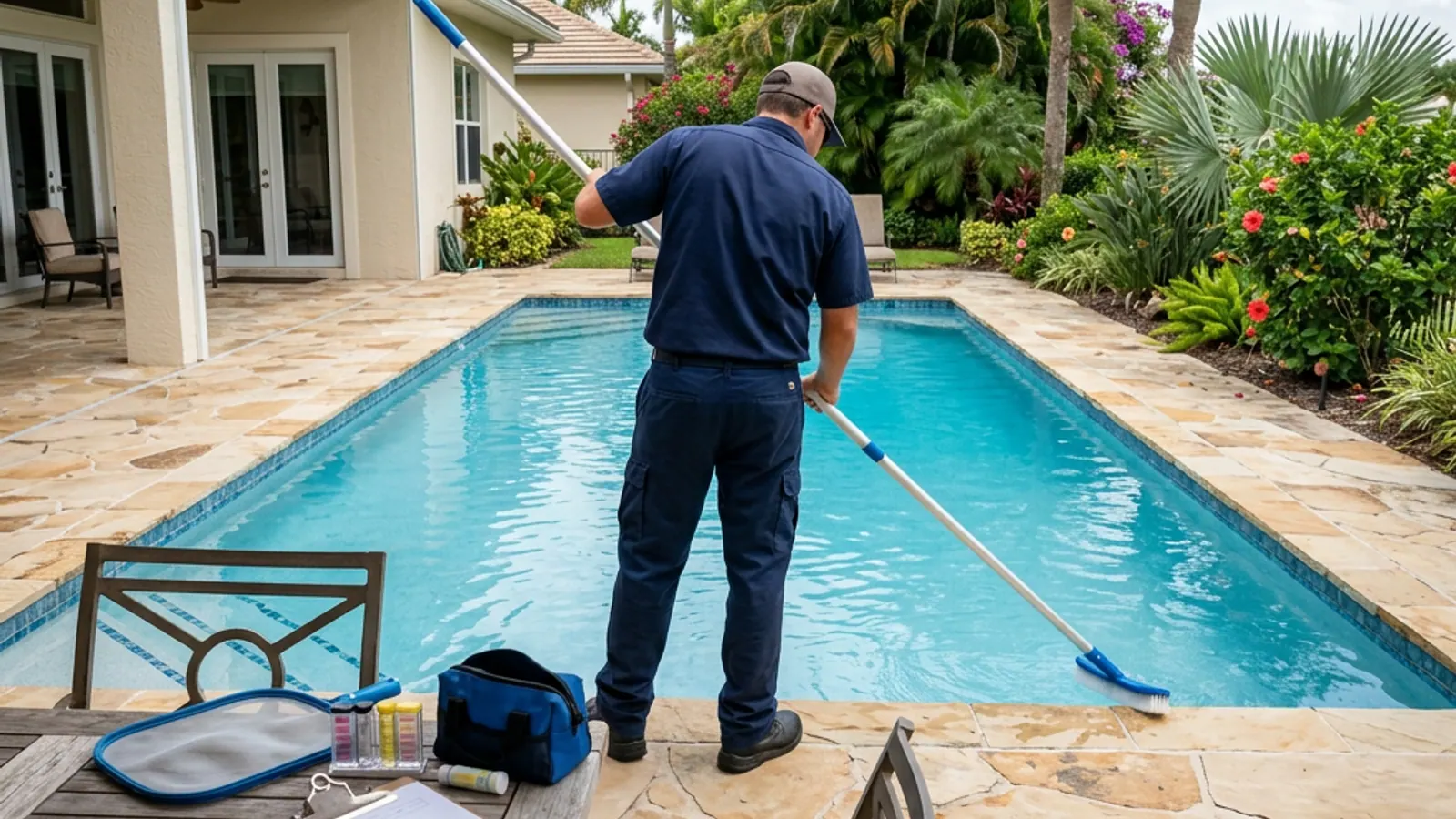
A pool-service visit handles scheduled maintenance; it cannot monitor every change during the following days. For an Orlando home, keep an eye on water visibility, accessible debris, equipment alerts, and test results. Tell your provider about unusual conditions instead of waiting until the next appointment. Ask for a simple written division of responsibilities. Know which tasks the technician performs, which checks you should do, and who to contact when a reading or equipment message is outside the expected range.
How often should you test chlorine and pH?
CDC recommends testing residential pool chlorine and pH at least twice a day, and more often when many people are swimming. Follow your test-kit instructions and keep the supplies in their recommended storage conditions. CDC identifies a DPD test kit as more accurate than test strips. Do not treat one good test after a service visit as assurance for the entire week. Water conditions can change with sunlight, contaminants introduced by swimmers, and other factors. If a result seems surprising, retest correctly and seek advice before adding products by guesswork.
What should you check before and after a pool party?
Before swimming, confirm visibility and appropriate water readings, inspect the area for hazards, and make sure safety barriers and required covers are in place. After heavy use, test again, remove visible debris, and report any equipment or circulation change. Discuss a busy gathering with your service provider in advance if you need help preparing the pool. Do not assume that a fixed chemical dose will suit every party. The pool volume, current readings, and product instructions determine treatment.
What changes when afternoon storms arrive?
Leave the pool and seek safe shelter as soon as you hear thunder. The National Weather Service advises waiting at least 30 minutes after the last thunder before leaving shelter. A pool screen or open porch is not appropriate lightning shelter. Once conditions are safe, inspect from a safe position, remove accessible debris, and test the water. If equipment has flooded or electrical components may be damaged, keep clear and get qualified assistance. Avoid turning a routine cleanup into an electrical hazard.
How do you know when weekly service needs extra support?
Call when water stays cloudy, algae keeps returning, chlorine repeatedly falls below the appropriate level, or equipment behaves differently. Persistent problems need diagnosis, not just another round of the same product. Avoid swimming if visibility or water readings are unsuitable. When requesting Orlando pool service from Splash Theory Pools, describe your swimming schedule, enclosure, sanitizer system, and any recurring concerns. Ask about written visit reports and the scope for filter cleaning and extra cleanup. A tailored plan helps you understand what regular service can do and what still needs attention between visits.
Frequently asked questions
Can I rely on weekly pool service instead of testing?
No. CDC recommends chlorine and pH testing at least twice daily, with more frequent checks during heavy use. Weekly service does not replace that responsibility.
Do I need a fixed pump schedule all year?
Not necessarily. Equipment, circulation needs, sanitizer system, and pool use affect the appropriate schedule. Follow professional and manufacturer guidance.
Is a screened pool safe during lightning?
No. Get out of the pool and use appropriate shelter when you hear thunder. Wait at least 30 minutes after the last thunder before leaving shelter.
What information helps when I call about a pool problem?
Share recent test results, when the change began, products recently added, equipment alerts, and whether the pool had heavy use or storm debris.