Quick answer
Wait for safe weather, inspect for damage or contamination, remove accessible debris, and test the water. Never assume the same chemical dose or draining plan fits every storm.
When is it safe to start pool cleanup?
Not while thunder is audible. The National Weather Service advises moving into appropriate shelter when you hear thunder and remaining there for at least 30 minutes after the last thunder. A screen enclosure, tree, or open porch is not safe shelter. That rule applies whether your pool is in Orlando, Winter Garden, Windermere, Clermont, or Apopka. Debris can wait. Do not check outdoor equipment or skim the water during a thunderstorm.
What should you inspect before touching equipment?
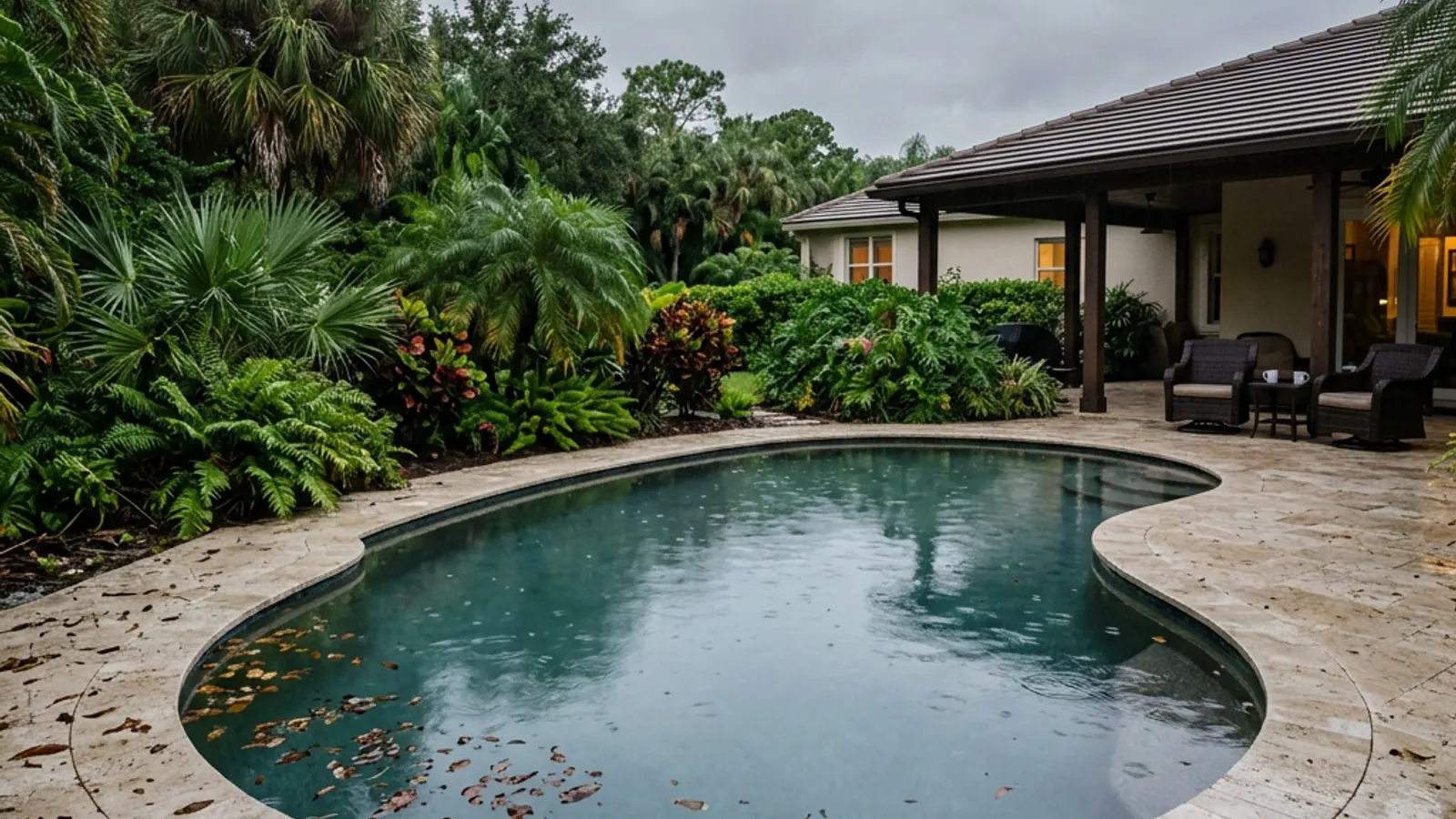
Once the weather is safe, look for damaged fencing, fallen branches, displaced covers, flooding near equipment, and unusual water conditions. Keep people away from downed wires and damaged electrical components. If the equipment area flooded, do not operate wet or damaged equipment; seek qualified assistance. Separate ordinary rainwater from floodwater entering the pool. Muddy runoff, sewage, or other suspected contamination is not a routine balancing problem. Keep swimmers out and contact a qualified professional or appropriate health authority for guidance.
Should you add chlorine immediately after rain?
Test first. Rain, debris, and pool use can change the work needed, but they do not create one correct dose for every pool. Remove accessible floating debris, check water readings with a reliable kit, and follow the treatment plan for the actual results. CDC recommends ongoing chlorine and pH testing, including at least twice daily for residential pools. A post-storm test is an additional check, not a substitute for routine testing. Follow chemical labels, never mix products, and avoid adding several treatments at once without guidance.
What if the water level is unusually high?
Do not empty the pool as a storm response. Drainage decisions can involve structural risks, equipment requirements, groundwater conditions, and local discharge rules. Ask a qualified professional what is appropriate for your pool before removing a substantial amount of water. If the pool has a designed overflow, check its operation according to the equipment guidance. Do not discharge treated or contaminated water into a street or storm drain on the assumption that it is allowed. Confirm the applicable local requirements before arranging a discharge.
How should you handle the filter and remaining debris?
After safely removing accessible debris, have filtration and circulation assessed if the water remains cloudy or flow has changed. Use the filter's clean-pressure baseline and manufacturer instructions rather than a universal pressure number. Never loosen or open a pressurized filter. A pool professional can choose a cleanup method compatible with your equipment and the type of debris. Large amounts of sediment, damaged equipment, or suspected contamination may require work beyond a normal weekly visit.
When can everyone swim again?
Resume only after hazards are addressed, visibility is suitable, and appropriate water readings are confirmed. If you cannot clearly see the bottom, keep swimmers out. Do not assume that clear-looking water or a single chlorine reading resolves suspected flood contamination. When contacting Splash Theory Pools, describe the storm debris, water condition, recent test results, and whether runoff entered the pool. Ask what cleaning and water-balancing work is appropriate, and arrange qualified help separately for any electrical or structural concern.
Frequently asked questions
Should I drain my pool before or after a storm?
Do not empty it as a routine storm response. Get professional advice on water level, structural risk, equipment, and local discharge requirements.
How long after thunder should I wait?
The National Weather Service recommends staying in safe shelter for at least 30 minutes after the last sound of thunder.
Is rainwater the same as contaminated floodwater?
No. Runoff carrying mud, sewage, or other contaminants requires a different assessment. Keep swimmers out and seek qualified guidance.
Do all pools need shock treatment after rain?
No universal dose or treatment fits every storm. Use reliable water tests, product instructions, and professional advice for the actual conditions.